

Siddha Yoga is based on the philosophy of Yoga as propounded
by ancient sage Matsyendra Nath and codified later by another
sage Patanjali in a treatise titled 'Yoga Sutra' several
thousand years ago. Mythology has it that Matsyendra Nath
was the fist human to learn of Yoga from Lord Shiva, who
is the embodiment of the eternal supreme consciousness,
in the latter’s celestial abode in the Himalayas.
The sage was asked to gift the knowledge of Yoga to mankind
for its salvation. The knowledge and wisdom contained in
Yoga was handed down from ages to ages in the time honored
Guru-Shishya (master-disciple) tradition. Guru is therefore
an institution in the Yoga tradition, which is central to
the practice of Yoga.
Yoga is considered an integral tool of the vast body of
Vedic (Hindu) literature that covers the whole gamut of
Indian spirituality. The 'Yoga Sutra', containing just 195
aphorisms, lucidly elucidates the eight stages of the 'Ashtang'
(eight-fold) Yoga, which a seeker passes through as he progresses
along the spiritual path.
Yoga is immensely beneficial in curing bodily and mental
diseases and restoring and harmonizing the psycho-physical
balance in a human body. However, using it for this purpose
alone is to leave out its sole aim — liberating the
seeker from the bondage of Karmas (actions), which tie him
down to the perennial cycle of life and death. For more details Click here .
Yogic philosophy recognizes the subtle link between the
human body and the cosmic Supramental Consciousness, which
is responsible for the body's very creation. A potent force
lies dormant at the base of the spinal column in every human
body. Because it is coiled around the base of the spinal
column in three and a half spirals, the ancient sages called
it ‘Kundalini’, the coiled one (like a snake).
‘Kundalini’ is considered the feminine divine,
‘Shakti’, which, according to Vedic scriptures,
is the very cosmic energy force responsible for the manifestation
of the physical/material world.
Since ‘Kundalini’ is the cosmic energy that
originates from the Supramental Consciousness, it is an
omniscient force, which enables the Yoga practitioner to
realize his true self. Once this self-realization is achieved,
the Yoga practitioner is led to Moksha, the final liberation
from worldly existence and its attendant miseries.
There is a close link between ‘Kundalini’ and
an intricate network of 72,000 ‘Nadis’, vein-like
structures that exists in the whole of the human body. Three
of these ‘Nadis’ are like arterial ways that
spiral upwards from the base of the spinal column all the
way to the roof the brain, called ‘Sahasrahara’.
The middle artery, also considered the major pathway, is
known as ‘Sushumana’. The other two arteries
on either side of ‘Sushmana’ are called ‘Ida’
and ‘Pingala’. Six ‘Chakras’ and
three ‘Granthis’ — consciousness centers
or cosmic energy hubs are located vertically above one another
at brief intervals in ‘Sushmana’.
This entire network of ‘Nadis’, ‘Chakras’
and ‘Granthis’ exists, in another dimension
not known to science, in so subtle a form that no high-tech
laboratory gadgets can ever detect its presence. However,
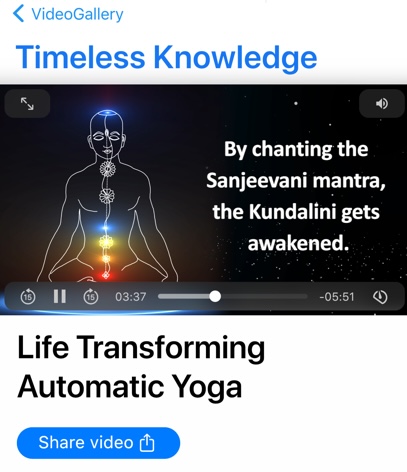
when ‘Kundalini’ is awakened through chanting
of divine mantra and meditation, it rises through ‘Sushmana’
to reach ‘Sahasrahara’, its final destination
where it’s Master — ‘Param Shiva’
— the eternal supramental consciousness resides. As
it spirals upwards through ‘Sushmana’, ‘Kundalini’
energizes the whole network of ‘Nadis’ and pierces
the ‘Chakras’ one by one. The awakened ‘Kundalini’
gets connected directly to the Supramental Consciousness
through the ‘Sushumana’ pathway. As a result
of this, every pore and cell in the human body is purified
and purged of its bodily and mental afflictions, making
the Yoga practitioner energized and ready for the onward
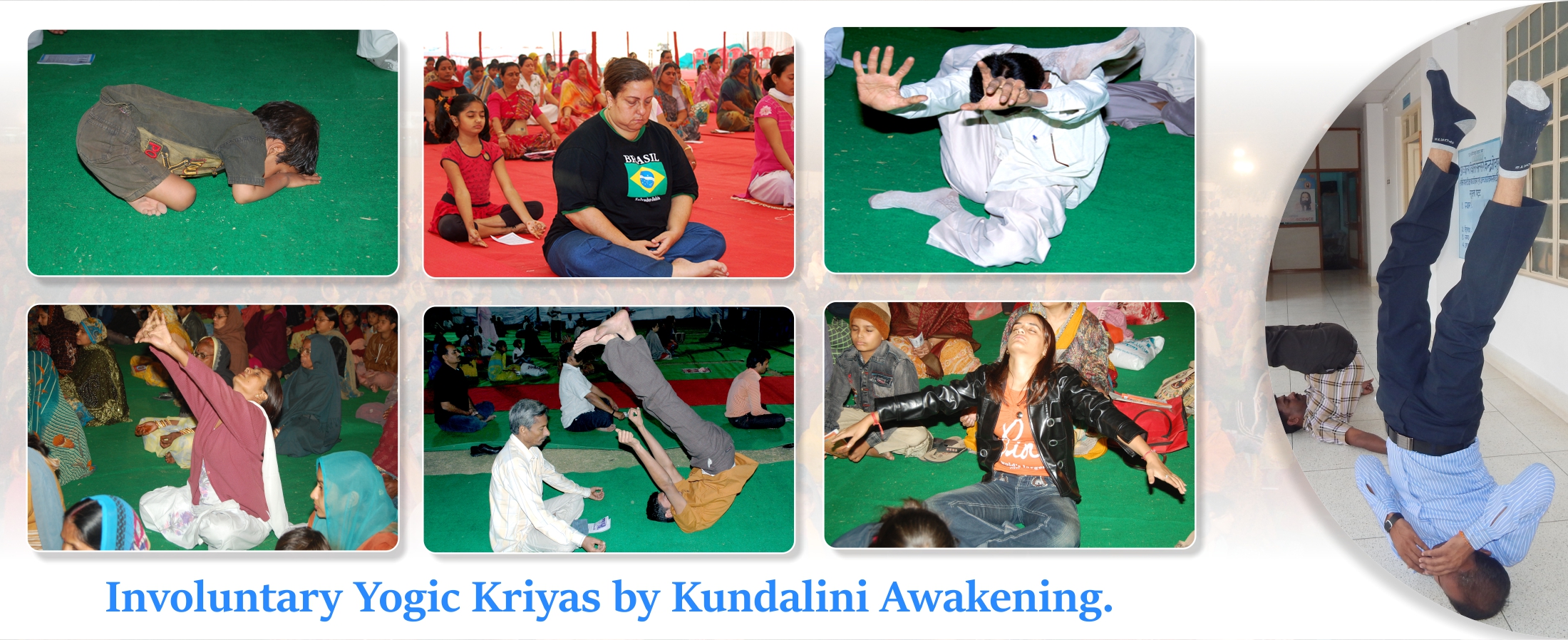
spiritual journey. The outward manifestations of this cleansing
process are Yogic ‘Kriyas’ or involuntary body
movements that occur during Siddha Yoga meditation. Swaying
from side to side, rapid movement of the head, clapping
and uncoordinated movement of hands are some of the most
typical of these ‘Kriyas’.
To an untrained or uninitiated observer, these may look
bizarre or even alarming. But they are neither abnormal
nor do they cause any bodily harm. ‘Kundalini’,
being an all-knowing energy force, is aware of which body
part or organ is in acute need of healing or cleansing.
So, the ‘Kundalini’ makes the practitioner perform
‘Kriyas’ that are specific to his needs. With
this cleansing, the practitioner is cured of all kinds of
chronic and even terminal diseases such as HIV, AIDS, cancer,
arthritis etc., and genetic disorders like hemophilia, mental
afflictions too are completely cured and stress is completely
relieved.
Also, the piercing of different consciousness centers equips
the practitioner with Siddhis (powers) such as increased
intuition, the ability to see unlimited past and future
and perceive the existence of worlds beyond the physical
one that we live in. When the ‘Kundalini’ reaches
‘Sahasrahara’, the practitioner’s spiritual
journey is complete as it is here that he realizes his true
self. This realization releases him from the bondage of
Karmas, which is the root cause of all human miseries. It
is also here that the seeker realizes that he is himself
the Brahman, the eternal Supramental Consciousness, the
state which also known as Moksha.
The Vedic scriptures acknowledge the interplay of ‘Brahman’,
the formless, limitless, eternal and never-changing Supramental
Consciousness on one hand and its manifestation as the consciousness
in the ever-changing material world. The consciousness in
the material world, which impacts all animate and inanimate
objects, is made up of a combination of three ‘Gunas’
(qualities) — ‘Sattva’ (lighted, pure,
intelligent and positive), ‘Rajas’ (passionate
and energetic) and ‘Tamas’ (negative, dark,
dull and inert).
Sattva is the force of equilibrium. Sattva translates in
quality as good and harmony, and happiness and light. Rajas
is the force of kinesis. Rajas translates in quality as
struggle and effort, passion and action. Tamas is the force
of inconscience and intertia. Tamas translates in quality
as obscurity, incapacity and inaction.
All the creatures, including humans, possess these Gunas.
However, no existence is cast in the single mould of any
of these three modes of the cosmic force. All the three
qualities are present in everyone and everywhere. There
is a constant combining and separating of the shifting relations
of these qualities. They constantly struggle to influence
or dominate each other. This is the reason why no person
is consistently good or bad; intelligent or dull; active
or lethargic.
When ‘Satvic’ quality in dominant in a person,
it propels him toward seeking greater consciousness so that
he could free himself from Karmic bondage and return to
the Supramental Consciousness to which he originally belongs.
Domination by either ‘Rajasic’ or ‘Tamasic’
quality leads the person onto an unending cycle of pleasure
and pain and life and death. The practice of Siddha Yoga
leads to the ascent of ‘Satvic’ qualities and
eventual progress to Moksha, the final spiritual liberation.
Each person has certain tendencies, called Vrittis that
guide his overall behavior. Tendencies are in turned influenced
by the three gunas of Sattva, Rajas and Tamas. Each of these
Gunas can be elevated or suppressed through the practice
of Yoga, according to The Geeta and ‘Yoga Sutras’
by ancient sage Patanjali. Lord Krishna tells his chosen
disciple Arjuna in the epic Mahabharata that elevation of
Sattva Guna and suppression of Rajas and Tamas Gunas through
meditation can help the practitioner develop and strengthen
Sattvic or pure tendencies while suppressing Rajasic and
Tamsic tendencies so that he/she can gain lasting health
and true higher knowledge and self-realization.
According to Vedic scriptures, only a Siddha Guru, an empowered
spiritual master, with an altruistic aim can bring about
a positive change in human Gunas and Vrittis by initiating
a spiritual seeker into Yoga. Since Sattva is a force of
equilibrium that ushers in true wisdom, its elevation on
mass scale can transform the entire mankind by eliminating
conflicts and discords, and bind the whole humanity together
with peace and harmony.
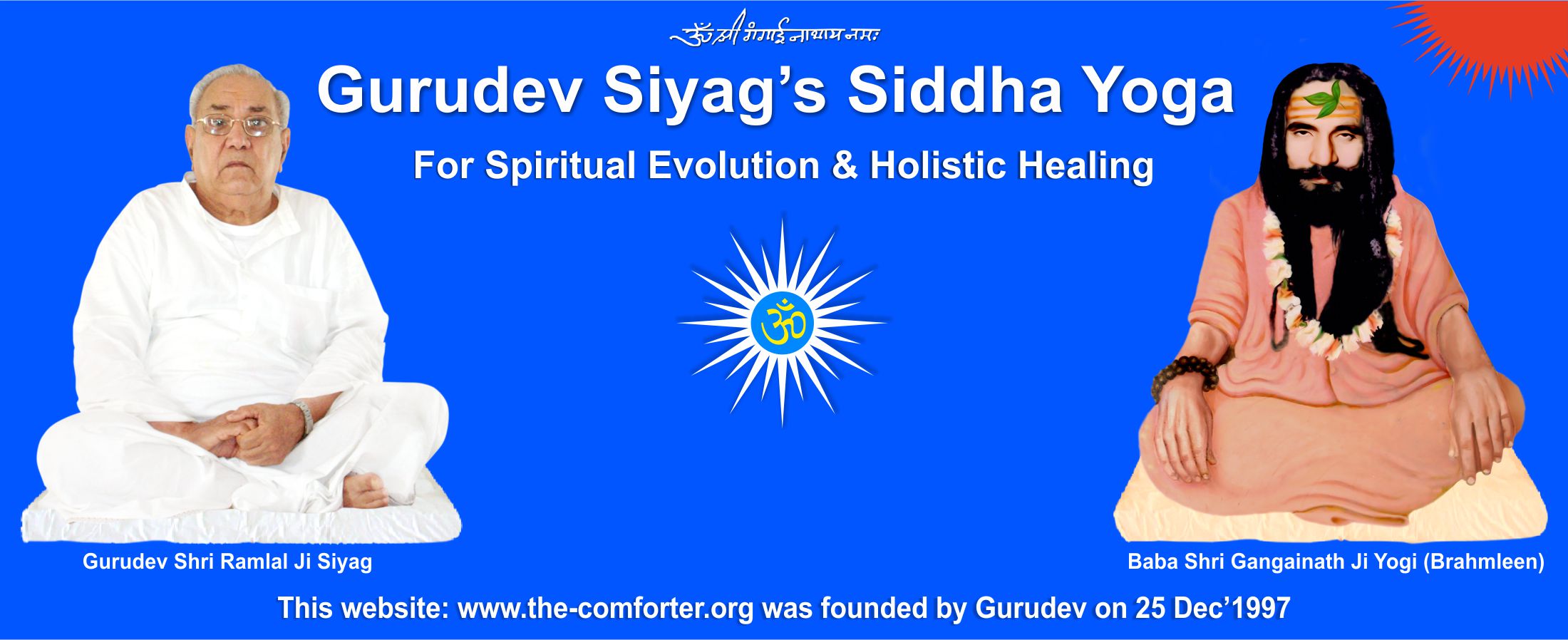
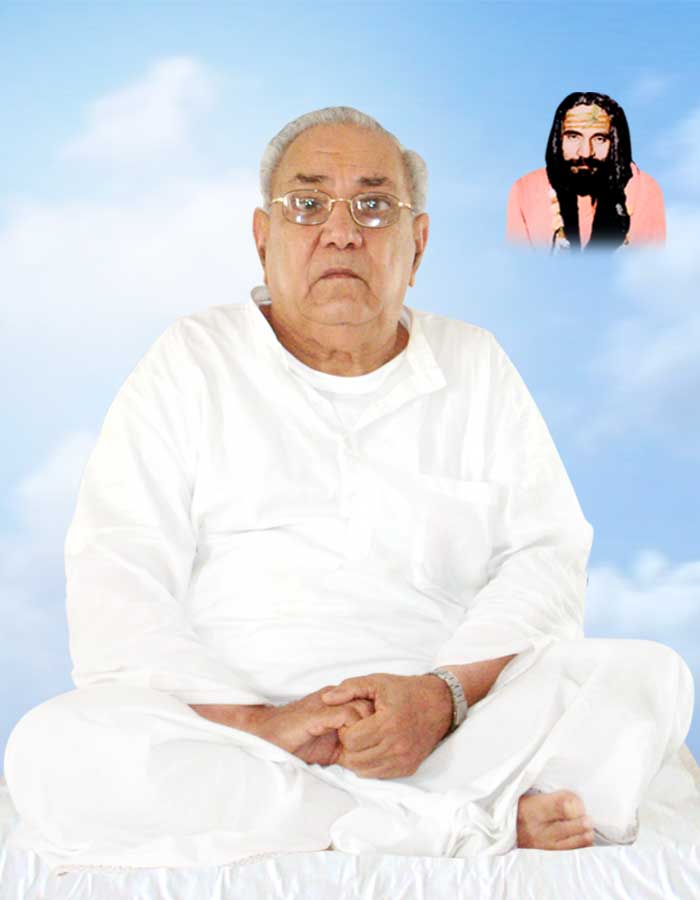
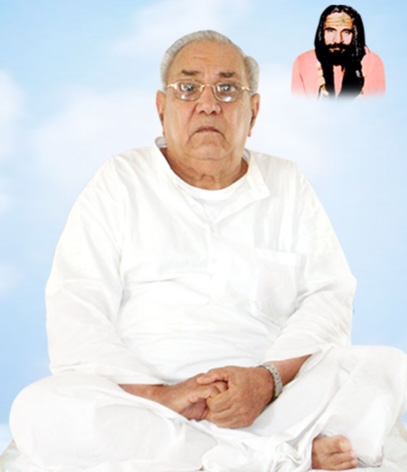
This is the mission — spiritual transformation of
mankind — that Guru Siyag has undertaken by promoting
the practice of Siddha Yoga.
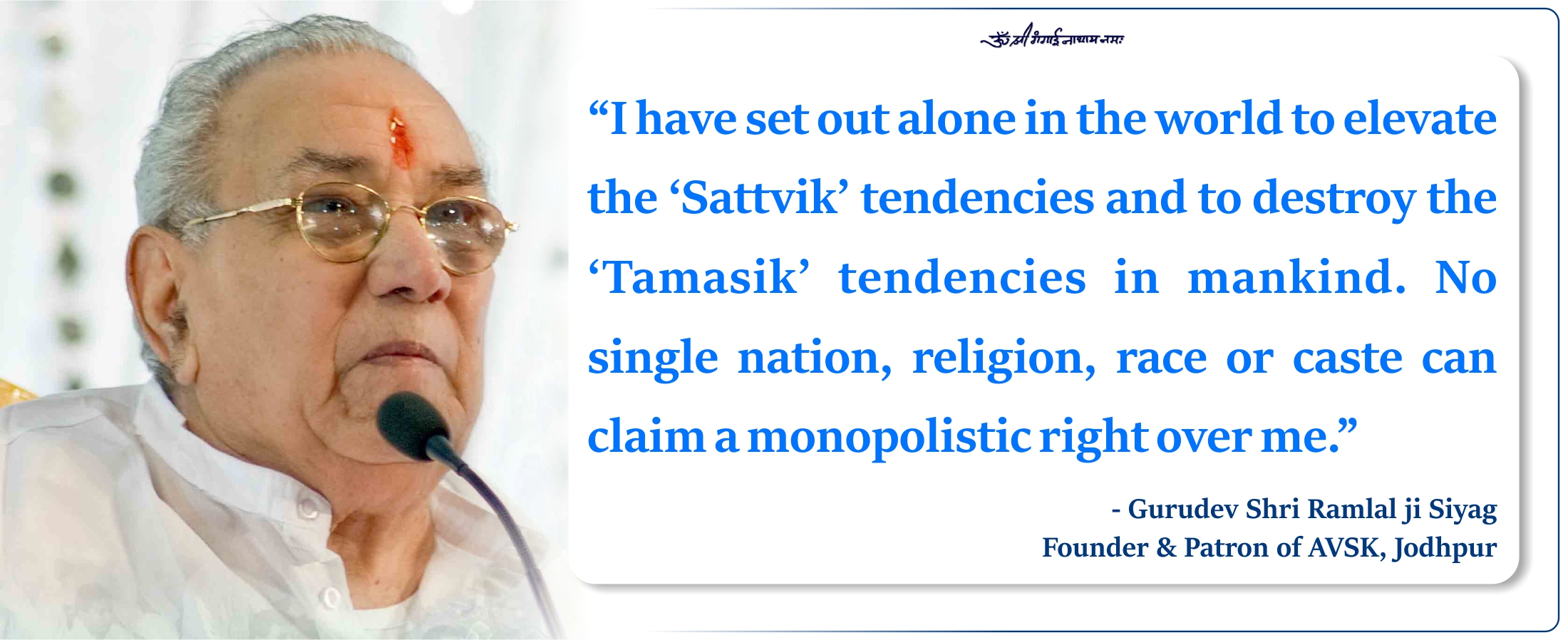
Guru Siyag has proclaimed, “I have set out alone
to elevate the Sattva Guna in mankind and to destroy all
its Tamsic tendencies completely. No single nation, religion,
race or caste can claim a monopolistic right over me.”