

 |
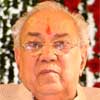
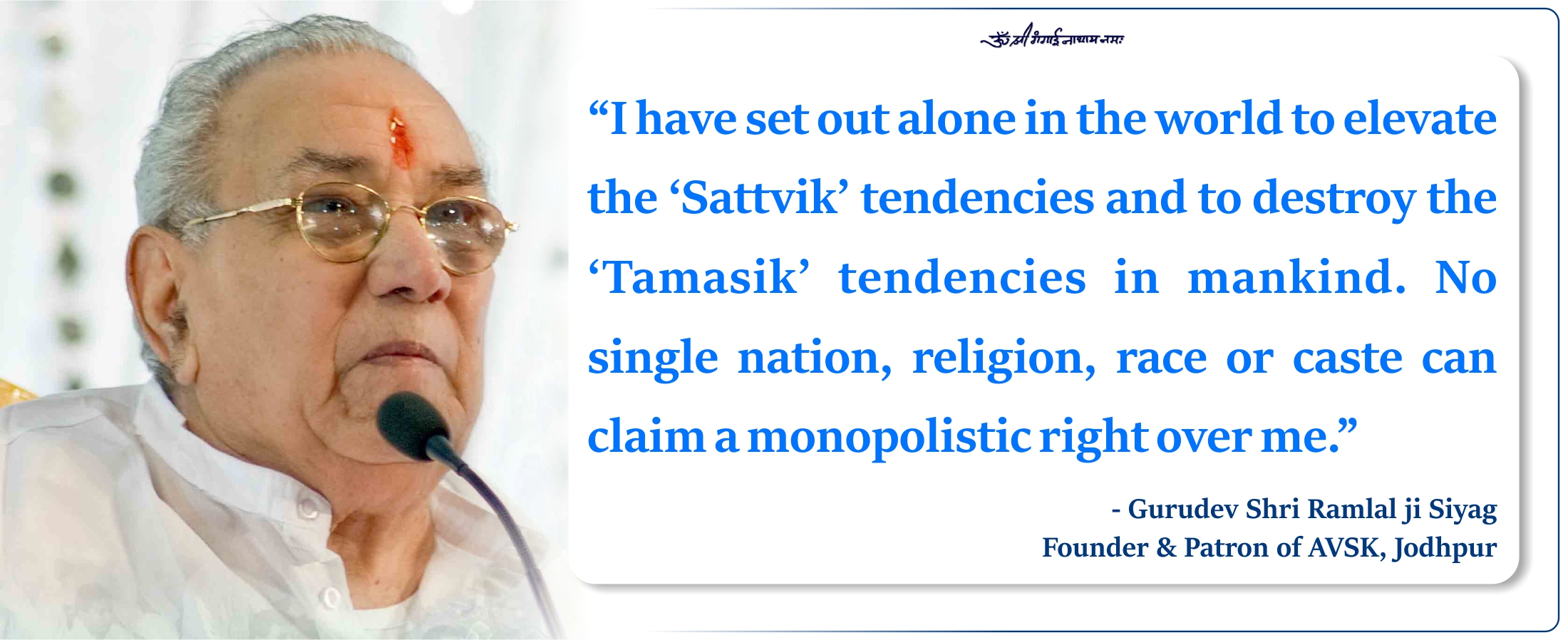
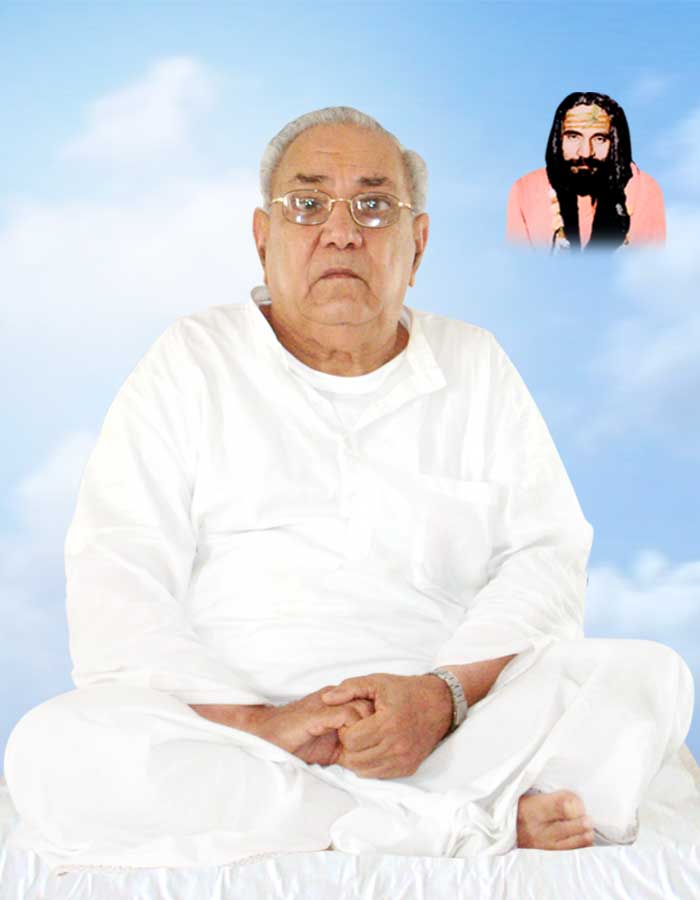
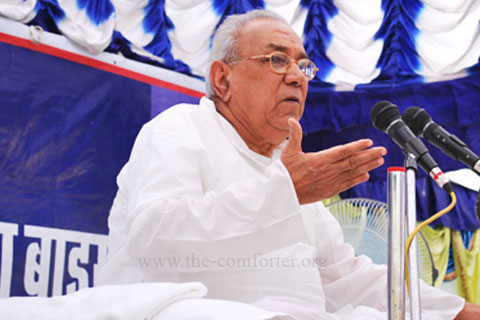
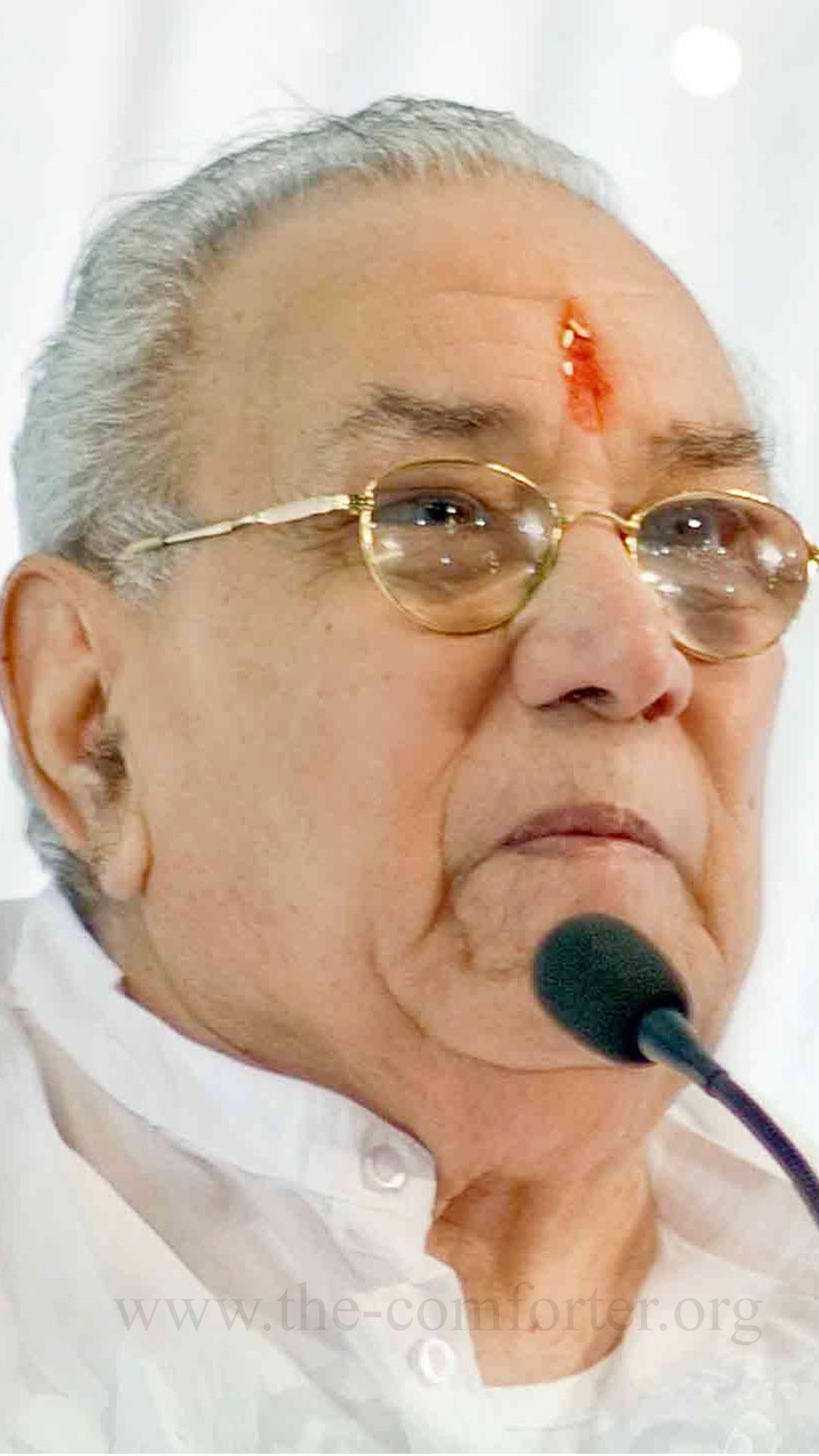
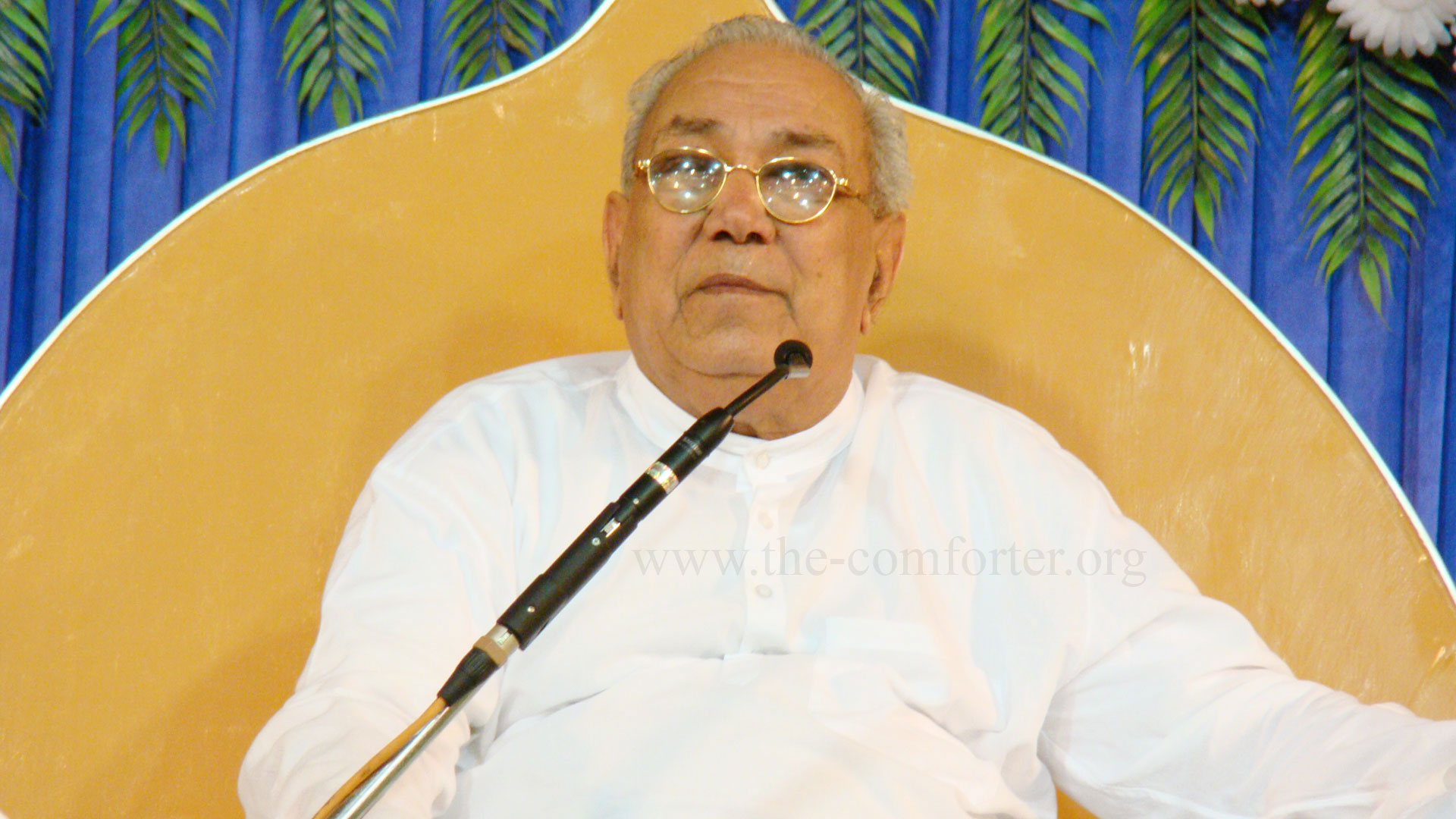
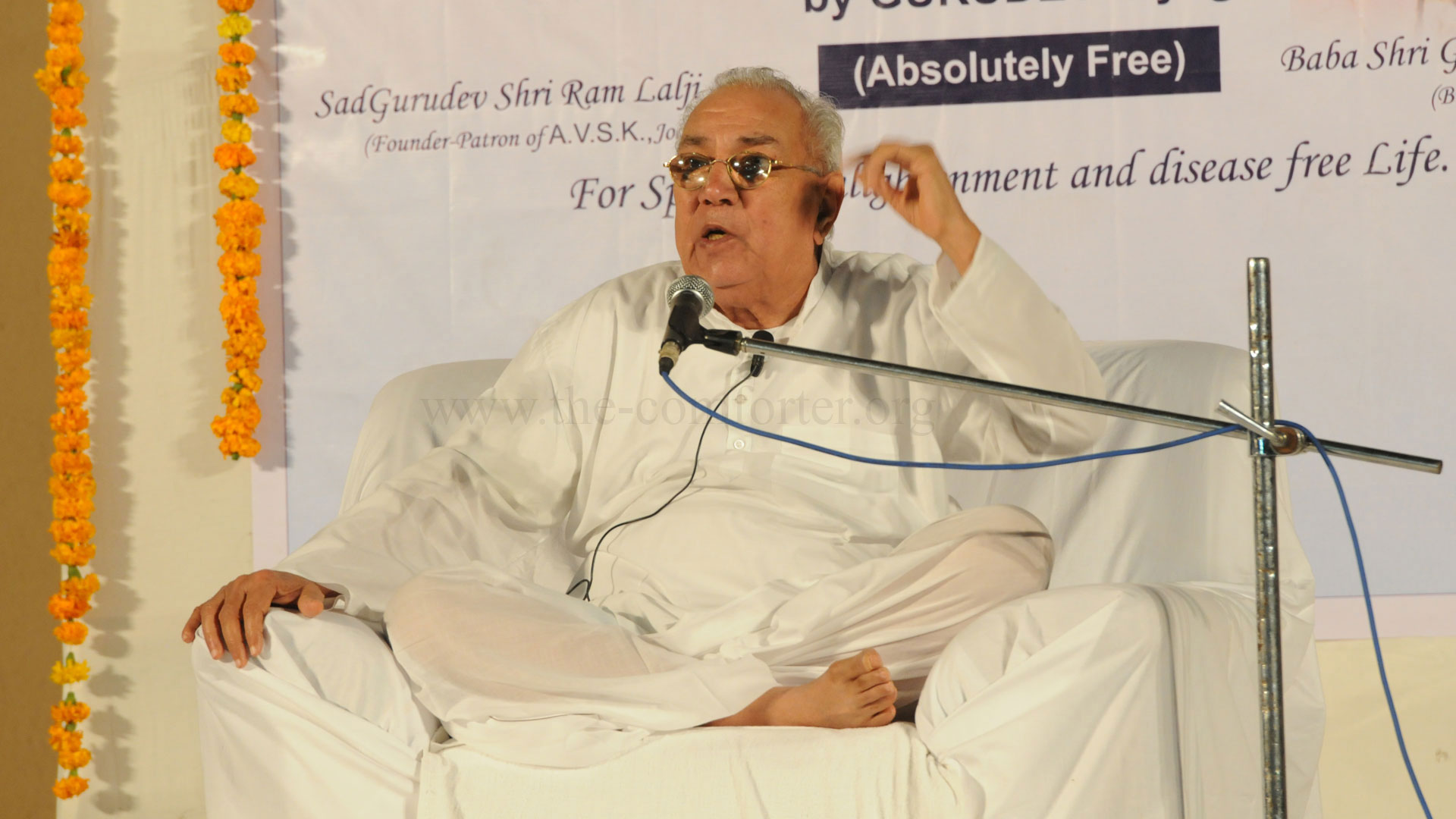
Guru Ramlalji Siyag, 82, one of India’s contemporary
saints, has gifted the world with a unique form of
Yoga derived from ancient India’s rich Vedic
(Hindu) spiritual heritage. Founder-patron of Adhyatma
Vigyan Satsang Kendra (AVSK), a Jodhpur-based spiritual
organization, Guru Siyag currently lives in the sand-blown
city of Bikaner in India’s north-western desert
state of Rajasthan.
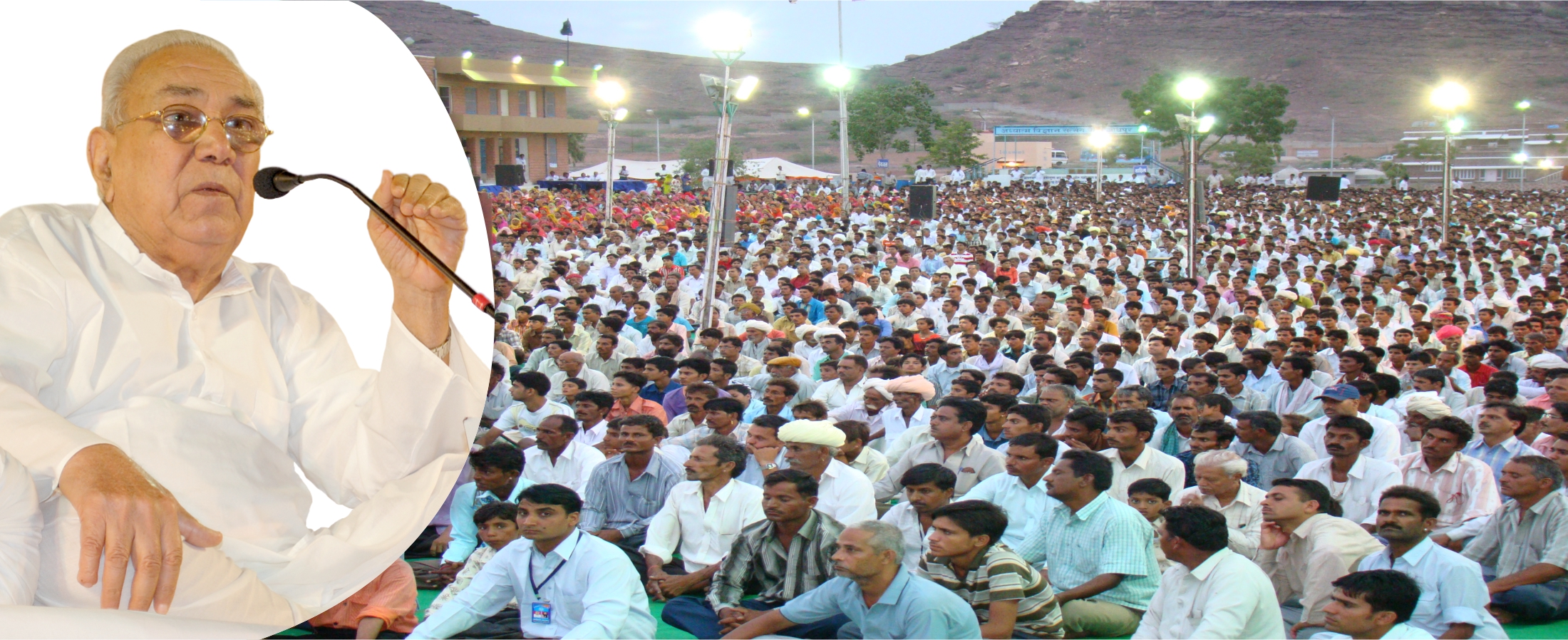
Revered by thousands of disciples all over India,
Guru Siyag has been spear-heading a quiet spiritual
revolution since the mid 1980s, when inexplicable
experiences prompted him to give up the ordinary material
life he was leading until then, and to begin a new
quest for bringing about a practical transformation
of mankind.
Blessed
with divine powers that were bestowed upon him in
the wake of mysterious spiritual experiences in the
late 1960s, Guru Siyag has freed countless people
from physical and mental agonies and led them onto
the path of self-discovery and realization of God.
He is reverentially addressed as ‘Gurudev’,
an honorific that equates him with God.
|
Guru
Siyag was born into a poor peasant family in Palana,
a small village with a typical agrarian backdrop 25
km to the north of the city of Bikaner, on November
24, 1926. Gurudev’s childhood was marked by
an intense struggle for survival — made more
difficult by the sudden demise of his father when
he was barely 3 years old. Gurudev’s mother,
a woman of grit with spiritual leanings, worked as
domestic help to feed her lone child and continue
their precarious existence. As there was no one else
in his family to take care of him while his mother
was at work, Gurudev had to be shifted to a local
orphanage during this period. Despite the privations
he suffered there, Gurudev managed to go to a local
school and finish high school level studies. However,
when he turned 18, his mother’s old age compelled
Gurudev to give up any dreams he may have entertained
of college education, and to take up a clerk’s
job with the Indian Railways.
|

Gurudev
with his family
|
Life
in Bikaner, a backwaters town then, revolved around the railway
junction there, which generated jobs through movement of cargo
and travelers during the British rule. Honest to the core,
young Siyag worked hard and long hours to make a living. His
cheerful demeanor, honesty and dedication to work won him
respect and admiration not just among fellow workers but also
among managers in the higher echelons of the local railway
network. He soon got married and started a family. In the
years that followed, he eventually had five children —
a daughter and four sons |
| |
The winter of 1967 proved to be a watershed
in Gurudev’s life. His humdrum life was suddenly upset
when he was seized by an inexplicable fear of death though
he wasn’t down with any illness at all. A local soothsayer
told Gurudev that he was under ‘Markesh Dasha’
— a constellation of planets casting a spell of death.
The only way to escape ‘imminent death’, some
local Hindu clerics told him, was to invoke the blessings
of Goddess ‘Gayatri’ through a special ritual.
Gayatri, the Goddess of cosmic light, alone could rescue him
from the clutches of death, he was told. Though a believer,
Gurudev wasn’t given to ritualistic practices. He didn’t
really care much about rituals. For him, the struggle for
survival was too intense to find time to pore over scriptures
or do the rounds of temples. But fear of death compelled him
reluctantly to submit to this recourse. He was advised to
perform a Havan — lighting of a sacred fire —
and to chant the Gayatri Mantra daily every morning. For the
invocation to be complete and offer him the divine protective
shield, he was told, he would have to conduct the ritual until
he had finished chanting the mantra 125,000 times.
In the October of 1967, Gurudev began the
ritual in earnest during Navratri, a 9-day festival, dedicated
to the feminine divine Shakti. He would get up in the wee
hours of morning every day and chant the sacred Gayatri Mantra
over ‘Havan’ for a couple of hours before getting
ready to go to the office. The pressure of illogical panic
that had seized was so intense that he performed the daily
ritual with utmost sincerity and concentration. It took him
three months to complete the ritual. Recalling those days,
Gurudev was to comment later that it was as if a divine force
had propelled him into an artificial state of fear only to
change his mundane life that he had led until then and to
goad him unto the spiritual path. |
The
day he finished the ritual, Gurudev went to bed that night
thinking he would wake up during the normal morning hour
the next day now that he was through with the arduous Gayatri
worship. However, having got used to rising early, he woke
up in the wee hours next morning. Just as he opened his
eyes and sat up in the bed, he felt the inside of his body
light up with an immensely bright white light. It was a
kind of bright light that he couldn’t compare with
any other — not even with sunlight. He noticed that
the light illuminated his body from inside. The light was
neither warm nor cold; it just brought a wave of soothing
peace. He was soon immersed completely in a state of joy
and bliss that he had never known to exist. The Light, gave
him an inner vision. Gurudev saw that despite the clear
bright light that illuminated his body from inside, he couldn’t
detect the presence of his organs, as if his body was a
mere empty shell!
Having
worked occasionally as a helper in the railway hospital’s
mortuary where doctors performed post mortems on deceased
patients, Gurudev had known the placement of various internal
organs, muscles and bones in a human body. And yet he could
see none of it inside his own body! He soon became aware
of a buzzing sound as if a swarm of bees were creating a
racket over a honeycomb. When he focused on the sound, he
realized it was emanating from the center of the naval.
As he concentrated he noticed, too, to his astonishment
that the buzzing was nothing but the Gayatri mantra being
repeated at an amazingly high speed resolution, making it
sound like the buzzing of bees! He was to learn much later
that the Gayatri Mantra that he previously chanted through
willful efforts had now become established as a non-stop,
self-run process, linking him permanently to the divine
force. He later realized he was initiated into Yoga by the
Feminine Divine herself!
|
 |
The
divine glow brought another discovery for Gurudev. He realized
that behind the façade of his identity and existence
in the material world, he was a very different entity altogether.
He was neither bound by his physical limitations nor was his
personal awareness restricted to the physical world that he
inhabited. He felt as if his personal being had expanded so
vastly that he could embrace the whole universe. In fact,
he felt he was the universe and he could feel the vibrations
of all the animate and inanimate beings inhabited it as if
they were his own. He realized too through this unique experience
that he was indeed what the ancient Vedic seers had called
Bramhan, the all pervading, changeless and amorphous divine
force. |
Just
as Gurudev was marveling at this extraordinary experience
and was afloat on the waves of joy, peace and love;
the fantastic vision broke off as suddenly as it had
occurred. Apparently, the gurgling sound of water suddenly
gushing out of an open tap in the bathroom close to
his bed had disturbed the trance-like state he was in.
The vision didn’t recur though he craved for the
experience and lay awake in the wee hours over next
several days. |
 |
The
sudden retreat into the mundane physical world was too
disconcerting for Gurudev. He felt as if his own vast
being was compressed into a small insignificant form
and crammed into an unfamiliar and hostile world weighed
down by un-evolved beings
For days later, Gurudev mulled over the amazing vision
he had experienced that Navratri morning. He just couldn’t
believe that anyone could live without internal organs.
And yet what he had experienced during the vision was
so real he simply couldn’t reject it as a hallucination.
He was to learn years later that what he had experienced
was the projection of a not-too-distant future when
human bodies would be much lighter and brighter than
their grosser form today! He had experienced the awesome
future awaiting human race!
It
was comforting for Gurudev to realize soon that the
Gayatri worship had indeed freed him from the fear of
death that had stalked him earlier. He realized too
that the material difficulties that had dogged him constantly
until then had also begun to ease with a passage of
time. But it dawned on him soon that life was no longer
the same. The mundane realities of life — eating,
sleeping, working and taking care of familial duties
— no longer interested him as deeply as they did
before the Navratri incident. He noticed another change.
Although he was not given to telling lies, he now realized
that he felt a compelling urge to speak the truth even
in routine life no matter if those around him found
it palatable or not. |
Because of his integrity, the fellow workers in his
office had elected Gurudev their leader in the local
railway employees union. His uncompromising stand on
what he perceived to be the truth while dealing with
union issues endeared him to fellow workers but dismayed
several of his colleagues on the union’s governing
council as well as the managers. |
|
Corrupt
union officials and managers found it difficult to
co-opt Gurudev in their manipulative practices that
often went against the interest of the workers and
robbed them off their rightful dues. This led to growing
hostilities in the office while struggle for survival
became even harder. He lived with his family in a
small, cramped one-room tenement on the railway campus.
In the summer when temperature hovered above 45 degrees
centigrade, life became unbearable for him and his
family members as he couldn’t afford to buy
a ceiling fan to cool his tenement. The railways did
provide certain class of employees with ceiling fans
on the basis of their seniority. Gurudev didn’t
qualify for this benefit. Officials would often drop
hints for him to compromise his principles to get
such benefits out of turn. But he would refuse them
outright.
In the months that followed, Gurudev became very restive;
he lost interest in material life. His casual belief
in God gradually turned into a firm faith. He now
spent more time in divine worship and meditation.
As he grew introspective he began to wonder about
life itself. Thoughts like “who really am I?
Why am I here, where am I going?” began to haunt
him day in and day out. When he consulted some pundits
well-versed in the Holy Scriptures about the changes
in his outlook brought on by the Gayatri worship,
he was told that he had indeed been blessed by the
Goddess with a Siddhi, special divine powers. They
however advised him to use those powers to get himself
out of material difficulties he was constantly facing. |
 |
Baba
Shri Gangainathji
|
Gurudev politely declined to heed their advice. He
believed that God had not changed his life and put
him on the spiritual path so that he could make money
and lead a comfortable material life. If God had tuned
him to divinity, Gurudev realized, He must have done
so for a special purpose and that He would show the
way ahead too. During
his spiritual pursuits in the ensuing months, Gurudev
came upon the philosophy propounded by Swami Vivekananda,
one of 20th century’s greatest spiritual figures,
who led the revival of the Hindu spiritual heritage
not just in India but also in America and Europe.
Swamiji’s emphasis on the practical transformation
of humanity through Vedic principles that offered
universal application inspired Gurudev and lifted
his spirits. Vivekananda strongly advocated practice
of Vedic philosophy through the revival of Guru-disciple
system which alone, he believed, could lead to spiritual
evolution around the world.
Heeding Swami Vivekananda’s advice, Gurudev
began search for a Guru in right earnest. He felt
frustrated when he couldn’t find one. So anxious
was he over this that he ignored the strong urge he
felt during meditation to visit an Ashram at Jamsar,
a small village 20 k. m. away from Bikaner. However
as the inner urge he felt became stronger, it was
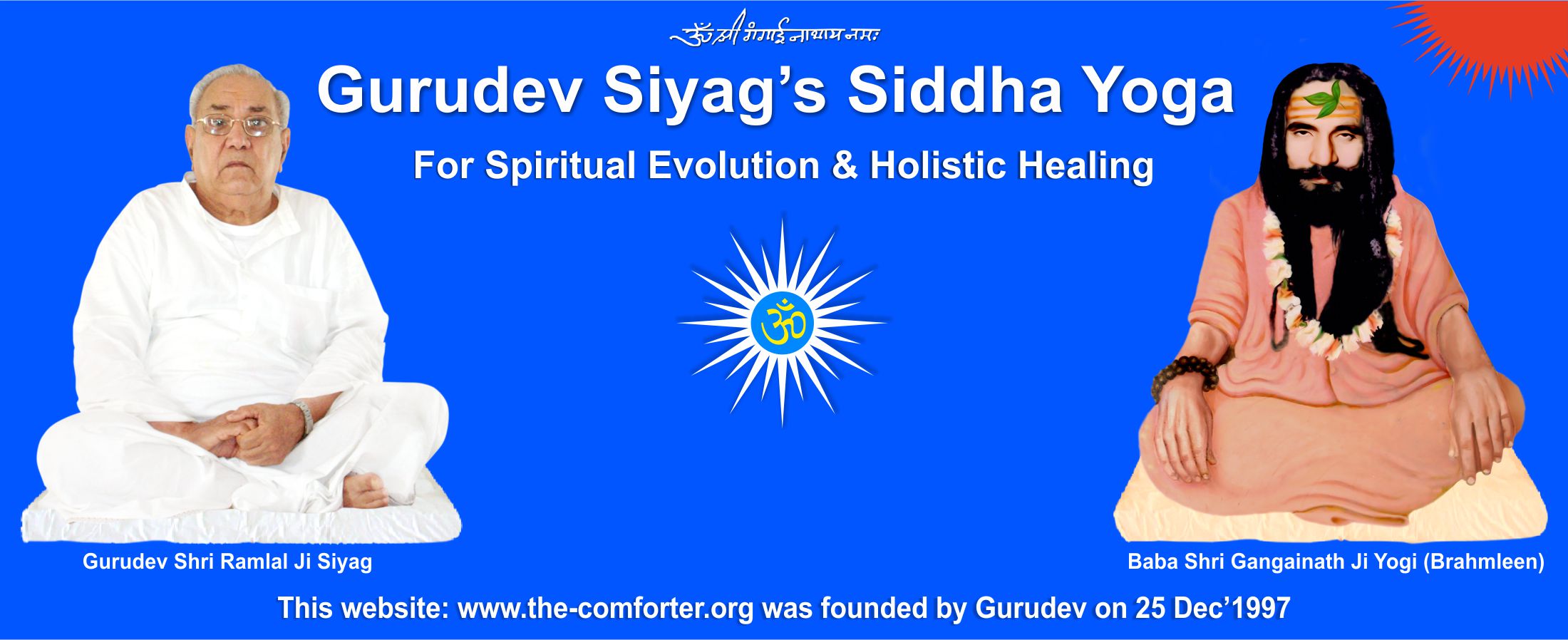
in April 1983 that he visited the Ashram. He was welcomed
by Baba Gangainathji, the presiding monk with a compassionate
look in his eyes.
|
| Apparently,
there was nothing extraordinary about their meeting.
But Baba’s compassionate gaze stayed with Gurudev
even after he left the Ashram, prompting him to visit
Baba’s holy abode a few days later again. It was
during the second visit, when Gurudev bowed and touched
Baba’s feet, that the master touched Gurudev’s
head by way of blessing. The moment Baba touched Gurudev,
he felt a tremendous vibration like a bolt of lightning
passing though his body. This was Baba’s way of
giving Diksha, initiating Gurudev in the unique form
of Siddha Yoga. No words were exchanged as Gurudev
left the Ashram soon. Little did Gurudev realize then
that he had just met the Guru he was searching for and
that his life had once again been changed forever. |
|
The
mental turmoil He felt grew worse by May-June 1983.
The state of turmoil that Gurudev was in, continued
even after the Ashram visit. By August end in 1983,
it grew so worse that Gurudev could no longer attend
to work in the office and he stayed away without
applying for leave. Then came a big jolt! On December
31, 1983 at 5 a.m., entire north-west India was
rocked by a severe earthquake. Seconds before the
earth shook, Gurudev was jolted out of deep slumber
in the wee hours that morning by a strange shock.
Gurudev was to learn later that it was precisely
the moment when Baba Gangainathji had passed away.
( To
read more about Gangainathji Click Here)
Baba’s
passing away didn’t affect Gurudev in any
noticeable way although he was to realize later
that in Baba’s death, he was orphaned once
again since his father’s death decades earlier.
However, soon afterward, he began to feel a strange
inner urge to visit Baba’s Samadhi (tomb),
which he dismissed as the tricks his mind played
on him. Gurudev’s behavior became eccentric
as inner anxieties now assailed him with greater
ferocity while he continued to stay off work. He
retreated to his native village Palana, where worries
about how to feed his wife and children virtually
drove him mad.
Once when he was walking down the road in a summer
afternoon, a local youth sitting under a tree called
him out. What he told Gurudev sounded very strange.
|
Gangainathji
's Samadhi |
| The
youth said Baba Gangainathji had been pestering him
to get Gurudev to visit His Jamsar Samadhi. When Gurudev
countered that Baba was no longer alive and that he
could not therefore have met him, the youth said the
monk has been appearing in his dream to give him the
command. Taking this for a divine call, Gurudev visited
Baba’s Samadhi and offered prayers there. |
| |
A
cardinal principle in the Hindu thought is that soul
is eternal, and that it is the body that dies when a
person passes away. It is also believed that a spiritual
master or a saint continues to guide his disciples even
after leaving his mortal body. The Samadhi of a saint
is therefore revered as the fount of divine blessings.
Little wonder that following his visit to Baba’s
Samadhi, Gurudev felt that the dark clouds of anxiety
were gradually clearing off.
As his meditation grew stronger, Gurudev began receiving
inner messages from Baba, guiding him through the turbulent
waters that lay ahead. It soon became clear to Gurudev
beyond doubt that it was Baba Gangainathji who was the
Guru he was looking for. Gurudev also realized that
despite leaving his mortal body, Baba could guide him
on the spiritual path without any hindrance and with
potent force. The process of receiving inner messages
was unlike any other experience that Gurudev had had
in communicating with the other person. No words were
communicated unlike the populist depiction of divine
communication in mythological stories and films. A crystal
clear thought would simply cross Gurudev’s mind
without any effort on his part to expect it, telling
him what precisely he needed to understand or do under
certain circumstances. It was like a ray of light rippling
through the dark water to the surface and to illuminate
the way ahead. |
Baba
soon made Gurudev realize that he was not destined
to lead a mundane life. It was made clear to him on
numerous occasions during deep meditations that Gurudev
was ordained to lead a Spiritual Revolution to Transform
the Entire Mankind. The transformation that Gurudev
was undergoing himself was in fact meant to prepare
him for that onerous task ahead. Gurudev was to learn
years later through the teachings Sri Aurobindo, of
one of India’s greatest spiritual masters in
the 20th century, that divine transformation of one
human being would eventually herald the transformation
of the entire mankind as that enlightened person would
lead the way. Gurudev was told in no uncertain word
that he was the chosen one for this mission although
his own sense of modesty and the trying circumstances
that he found himself in made it harder for him to
believe this divine prophesy.
It
was during these turbulent times in 1984 that Gurudev
was visited by yet another strange happening, whose
implications could impact humanity in the years
ahead. One night after he retired to bed in a restive
mood, he had vision in a dream. In the vision, he
was shown a passage from what he could vaguely perceive
to be a holy book, with the voice of an adapt saying
“Thou art that; thou art that”. The
next morning, Gurudev mulled over the strange vision
and tried to think if what he saw in the dream was
a vision or just a strange dream; nor could he understand
the meaning of words “Thou art that”
which He had never heard before. Since the passage
was in Hindi, Gurudev could recall some words in
the passage, but they made no sense to him.
|
 |
A
couple of days later, Gurudev’s youngest son,
Rajendra, brought home an old dog-eared book. While
walking home from his school, the young boy felt a
strange urge to pick up the book when he noticed it
lying abandoned in a cobbler’s shop by the roadside,
and gave it to Gurudev later. As Gurudev turned the
pages of the book with no particular interest, he
was jolted in to attention when he noticed a passage
in one of the pages. It was exactly the passage that
he was shown in the dream. He read the book over and
again for a few days later, but couldn’t fathom
what it was about. All he could gather was that the
book, meant for children, was illustrated with pictures
to explain to them in simple terms the Christian faith.
Not being very religious himself, Gurudev was not
conversant deeply with the Hindu scriptures, much
less be aware of philosophy of other faiths. |
|
Though
the dream remained a puzzle for him, Gurudev began
experiencing a new calm. He returned to Bikaner from
Palana, where he had taken a refuge following mental
turmoil, reported back to work and resumed normal
duties in the office. Strangely, no one took any serious
objection to his long unofficial absence from work,
which would have normally led to his being fired from
the job. It was as if he had never deserted his job
at all. This was two years after he had first prayed
at the Samadhi of Guru Baba Gangainathji.
Once
back in Bikaner, Gurudev asked around in his social
circle if Christians followed any holy book like the
Hindus did the Bhagwat Geeta. It was then that he
learnt about Bible. He was told the passage from the
holy book, which was shown to him in the vision, formed
a part of the gospels in Bible written by St. John,
and that what I had seen in the dream were chapters
– 15:26-27 and 16:7-15. Later a friend, who
had taken a short course in Bible to familiarize himself
with the holy book, presented Gurudev with a Hindi
version in a booklet form. Reading the booklet gave
Gurudev some idea about Christianity. However, being
a follower of the Hindu faith, Gurudev thought it
irrelevant to pursue Bible any further and lost interest
in the subject. |
However,
the inner messages and the voice soon returned with
renewed urgency, urging Gurudev repeatedly to read
Bible in original English. He managed to borrow a
copy of Bible from a friend who was a Lecturer in
a local Law college. Reading The Bible in English
didn’t prove to be of any help either; he didn’t
find the passage in the book that he was shown in
his dream. Giving up, Gurudev returned the book and
dropped the subject once again, thinking it was the
end of the dread episode. But that was not to be.
The inner urgings returned now with greater intensity.
Making queries once again, he learned something that
surprised him; Christianity was divided among many
sects, two main among them are Catholics and Protestants.
While Bible he had read earlier was followed by Catholics
the one followed by Protestants contained the passage
from St. John’s Gospels that he was shown in
the dream.
|
With
Baba’s blessings, Gurudev did mange to get
a copy of Protestant Bible and read the Gospel part
that he was being constantly goaded to. The relevant
part of Gospels contained a prophesy made by none
other than Jesus Himself of the advent of the Comforter,
who, He prophesied, would save only the truly faithful
from certain death while the rest of humanity faced
terrible divine retribution in a global calamity
brought on by war and famine in the 21st century!
Gurudev was to learn later that the Old Testamnet,
the first part of the Bible that the Jewish people
follow, contains similar prophesy by prophet Malachi
about the advent of the Comforter, whom He describes
as E-li’jah. Reading prophesies from the Holy
book followed by both the Christians and Jewish
people made Gurudev realize that they are somehow
linked to the preaching offered by Lord Krishna
in the Geeta thousands of years ago that preceded
Christianity and Judaism.
Reading
further about what the Comforter is prophesied to
do, convinced Gurudev that somehow he had a role
to play in the realization of these prophesies through
the inner Yoga that he was learning during deep
meditation since the Navratri incident. (Please
see Section: ‘Fulfilling World Prophesies’)
|
 |
|
|
During his meditations since his
return to Bikaner and resuming the office work, Gurudev
received Aadesh (command) from Baba during mediations
that he should quit his job and dedicate himself fully
to the spiritual mission entrusted to him. So, it
was at the urging from Baba that Gurudev quit job
through voluntary retirement on June 30, 1986, nearly
seven years before reaching his superannuation age.
Gurudev was to comment later, “I was serving
the railways earlier; now I am serving my Guru. This
is a lifelong job which I can never quit. I have left
the worries of the material needs for my family entirely
to Him. I am my Guru’s faithful servant; whatever
I may gain or lose in this mission will be according
to His wish.”
Baba
also conferred Gurudom on his chosen disciple and
directed him to initiate people into Siddha Yoga
as his disciples. Gurudev started initiating people
into Siddha Yoga through Diksha programs initially
in Jodhpur and few other cities in Rajasthan. Those
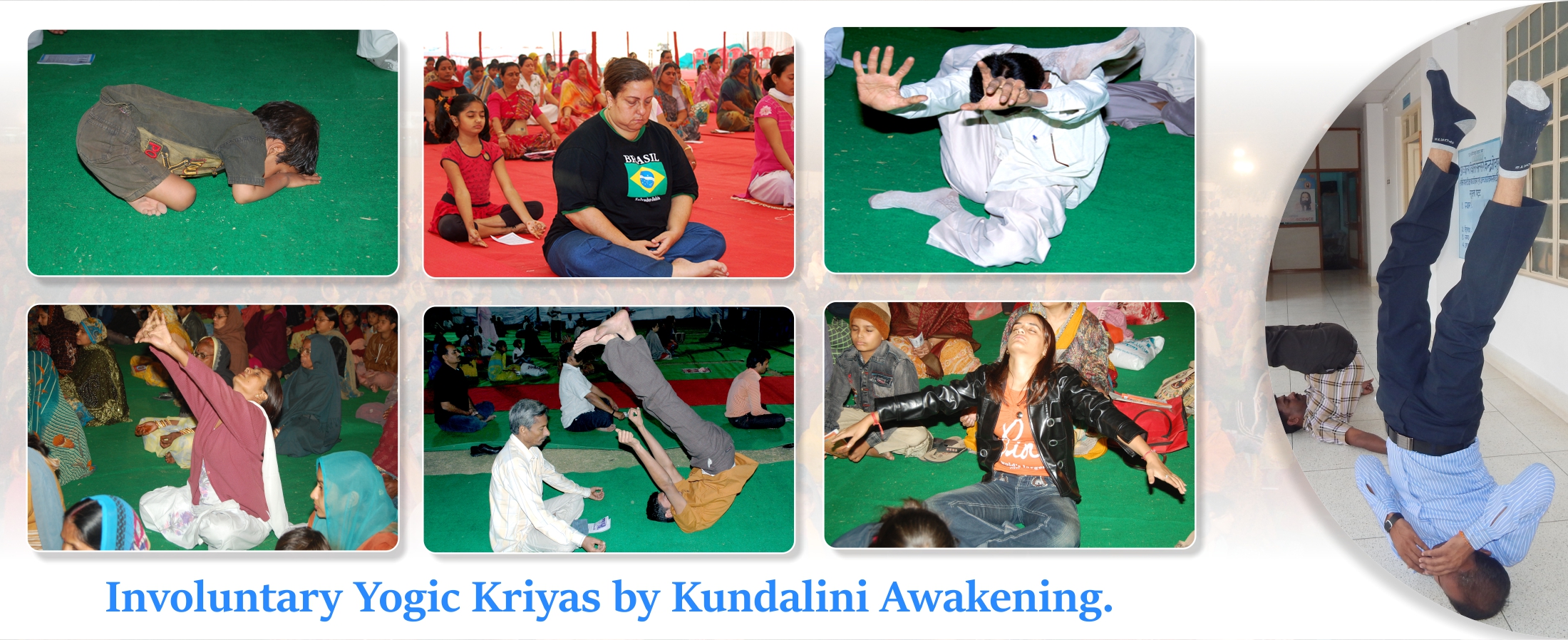
who came to Gurudev and became his disciples, experienced
an amazing positive change in their lives; they found
their diseases/ chronic ailments cured, and felt spiritual
awakening through chanting of the divine mantra that
Gurudev gave them during these programs and the meditation
they did along with the chanting. As word about Gurudev’s
unique Siddha Yoga and healing powers spread like
wild fire, Gurudev was invited to other cities and
towns to conduct Diksha programs. No discrimination
was ever made on the basis of caste, color, race or
religion for the people to avail of Gurudev’s
blessings. |
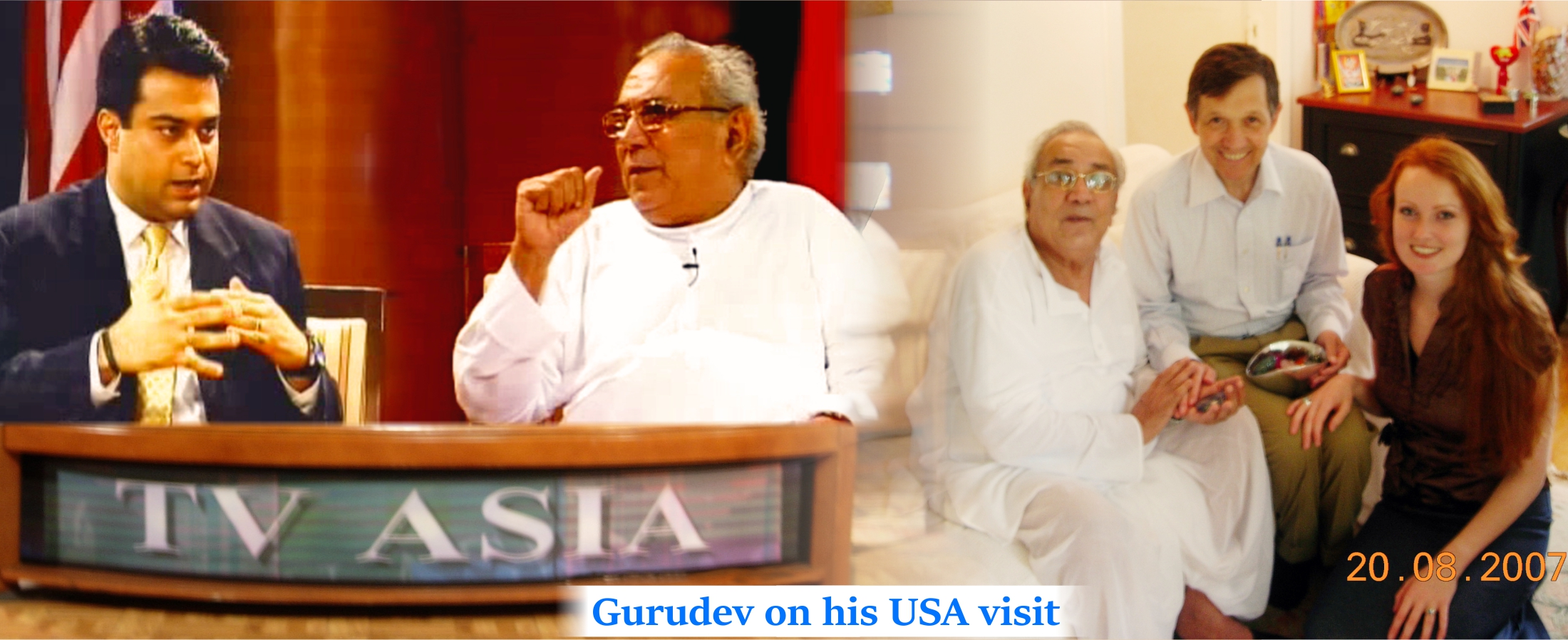
Gurudev has since then traveled to different cities
in India and put thousands of people on to the
path of Spiritual Evolution and good health. However,
Gurudev says that he is only half way through
his mission. He believes that until he reaches
out to people across the globe in the western
hemisphere to motivate them to join the spiritual
path that Baba Gangainathji has shown, there will
be no real peace and prosperity in the world.
“Spiritualism of the East needs to join
hands with the materialism of the West, without
which world will never be without conflicts and
discord. It is this spiritual union of East and
West that I have set out to accomplish to usher
in lasting peace in the world,” says Gurudev.
|
|
|
|
|